Friday, December 20, 2013

The Wealthy States of the Mid-Atlantic


According to the recently released data from the U.S. Census Bureau's 2012 Small Area Income and Poverty Estimates, counties and states in the Mid-Atlantic* disproportionately dominate the top of their respective rankings of wealth and (lowest) poverty. This article discusses the wealth of the states  in the region. (A later post will focus on the counties)

The top 10 wealthiest states by median household incomes (Mid-Atlantic* states are in bold):


RankStateMedian Household Income
1.Maryland$71,169
2.New Jersey$69,705
3.Connecticut$67,275
4.Alaska$66,503
5.Hawaii$66,086
6.Massachusetts$65,378

District of Columbia$65,231
7.New Hampshire$63,157
8.Virginia$61,782
9.Minnesota$58,828
10.Delaware$58,326

Wednesday, December 4, 2013

Libraries: Setting a new standard for avant-garde urban design?

Part II- Washington D.C. & Montgomery County, MD

This article one part of a multi-segment series titled The Urban Transformation, which takes a look at how certain public institutions and private businesses are adapting to nascent urban environments

Acknowledging the importance of public libraries, a number of local governments across the nation have proceeded with ambitious plans to dramatically modernize their libraries to accommodate, rather than fall victim to, the digital age. One library in San Antonio, Texas has even abandoned books entirely, becoming "all digital." In the DC Metro Area, both the District of Columbia and Montgomery County public library systems have sought to revolutionize their respective libraries with new, architecturally-striking buildings designed to emphasize the "community meeting place" and "digital information access" functions of libraries.

District of Columbia Public Libraries
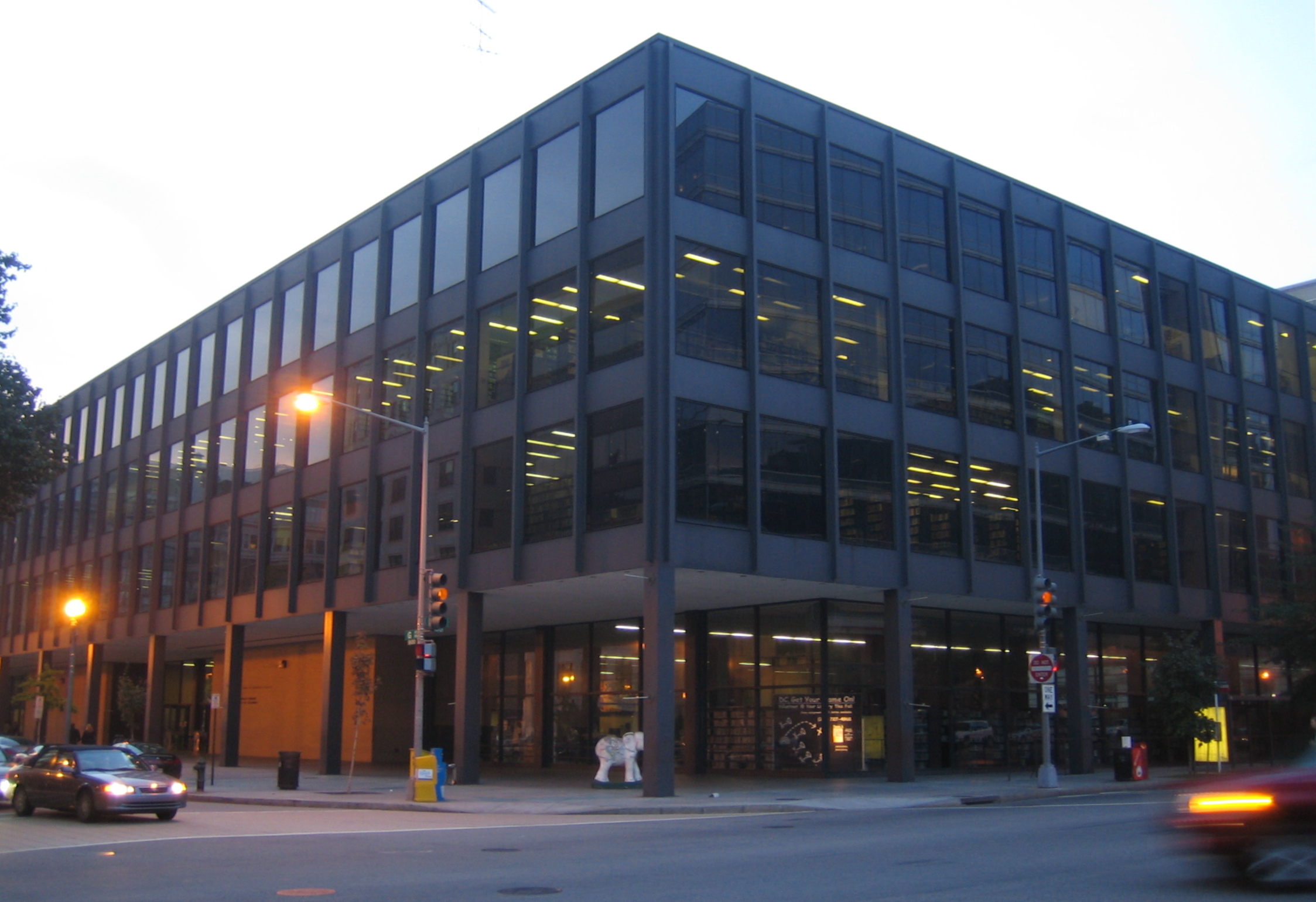
Martin Luther King Jr. Memorial Library, NW Washington D.C.
Photo Credit: Wikipedia
A number of older DC's libraries already have distinct architecture, such as the international-style Martin Luther King Jr. Memorial Library designed by Ludwig Mies van der Rohe which serves as the main facility for the District of Columbia Public Libraries (DCPL) system. However, until recently the majority of the system's libraries have the "traditional" bland, boxy, cramped, uninspired, library design  Over the past several years though, 14 of DCPL's 24 libraries have been rebuilt or renovated as part of the library system's ambitious "Library Building Program" with several more renovations, rebuilds, and expansions planned. The program sought to build "21st-century" libraries through community input by conducting community meetings, outreach activities, and focus groups. As a result each library is tailored to its specific surrounding community and no two libraries are the same. 

Monday, December 2, 2013

Libraries: Setting a new standard for avant-garde urban design?

Part I
Seattle Central Library, Seattle, WA
Photo Credit: Wikipedia/Steven Pavlov
This article is one part of a multi-segment series titled The Urban Transformation, which takes a look at how certain public institutions and private businesses are adapting to nascent urban environments

In many cities across the United States some of the most architecturally distinctive and impressive buildings are libraries. In the Mid-Atlantic the Thomas Jefferson Building of the Library of Congress and the main branch building of the New York Public Library are two of the most iconic buildings and are part of the second and third largest libraries in the world respectively. Both buildings feature neoclassical architecture and were constructed around the same time in the 1890's. In a number of urban communities in the Mid-Atlantic, as well as around the country, there is a growing trend to build architecturally striking libraries, if not quite at the same enormous scale as the grand libraries of the late 19th century.

Libraries as Architectural Icons
The main purpose of libraries has always been to serve as physical (and now virtual) repositories of society's collective knowledge, history, and achievements in all fields from religion to science to culture. Therefore it is fitting that libraries visually reflect the content they contain and provide inspiration to visitors and passers-by.

Wednesday, November 27, 2013

Montgomery County thinks urban...except when it comes to banks

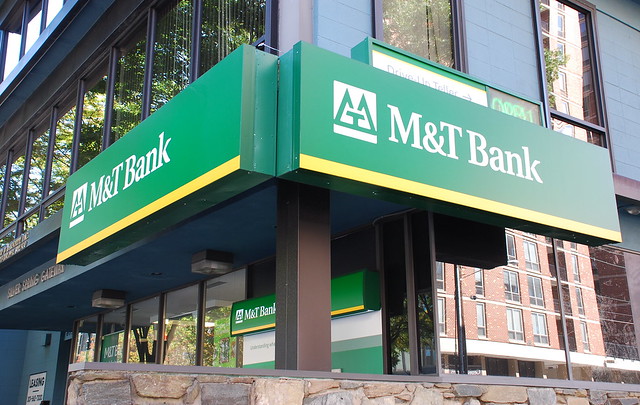
M&T Bank in Downtown Silver Spring
Image Courtesy of Adam Fagen
This article one part of a multi-segment series titled The Urban Transformation, which takes a look at how certain public institutions and private businesses are adapting to nascent urban environments

Montgomery County, MD probably utilizes more new urbanist, smart growth principles in development planning than pretty much every other jurisdiction in the DC Metro region (outside of Washington D.C. itself), and more so than most suburban counties in the nation. However, while new walkable, transit-oriented urban centers in the county have been rapidly growing over the past decade or so with the construction of new high-density, mixed-use development built along these principles, it seems that one type of business has stubbornly resisted the urban transformation: bank branches.

The typical template for mixed-use development in Montgomery County's urban centers comprises either residential units or commercial office space (relatively rare in these days of high vacancy rates across the Metro area and limited government and business expansion) above ground-floor retail in mid- or high-rise buildings. When I use the term "retail" I'm encompassing a wide range of businesses such as: restaurants, nightclubs, barbers, supermarkets, pharmacies, bars, bank branches, etc. The combination of uses in these mixed-use developments is crucial to creating a true urban environment where residents can live, work, shop, and play, and the streets are active from dawn well into the night.

For some reason, banks (in Montgomery County's urban areas) have shied away from this type of development, while pretty much every other form of "retail" has embraced it. There are a number of new bank branches popping up in the county's urban areas, but many as traditional stand-alone single-story buildings with parking, rather than on the ground-floor of multi-story buildings. Some of these locations are pretty high-profile and on very valuable plots of land. 

Monday, November 4, 2013

Soaring to New Heights: The Growing Airports of the Mid-Atlantic

John F. Kennedy (JFK) International Airport in New York, NY
Image courtesy allairports.net
According to the FAA's report on the busiest airports in the US (by total passenger boardings) for 2012, eight of the 50 busiest airports in the nation are located in the Mid-Atlantic. Of these eight airports, three are in the New York metropolitan area, three are in the Baltimore-Washington metro area, one is in the Philadelphia metro area, and one is in the Pittsburgh metro area. The busiest American airport in 2012 was once again Atlanta's Hartsfield-Jackson International Airport with 45,798,809 enplanements. The busiest airport in the Mid-Atlantic (and 6th busiest nationally) was New York's John F. Kennedy International Airport.

Spotlight on BWI Airport: Rapidly expanding airport regains title of busiest airport in Balt-Wash Metro


In recent years Baltimore-Washington Thurgood Marshall Airport (BWI Airport), has been experiencing a renaissance of sorts. Built in 1947 in unincorporated Anne Arundel County, MD near Glen Burnieand originally named Friendship International Airport, it became the first airport in the region (and one of the first in the nation) with the ability to serve jet aircraft in 1957. In 1974, Friendship Airport (which is approximately equidistant from Washington D.C. as Dulles Airport) was renamed Baltimore/Washington International Airport to attract a greater share of the Washington D.C. air travel market. BWI Rail Station, which was dedicated on October 23, 1980, further increased the airport's connection to the Washington D.C. market and was the first intercity rail station in the U.S. built to service an airport.

Promotional shot of Friendship airport on opening day in 1947
Image courtesy of Kilduffs
In the following decades BWI grew to become a major domestic and international airport, as well as an important hub for Piedmont Airlines (and later it's successor USAir/US Airways) all the while maintaining its status as busiest airport in the region. BWI's legacy as a hub for low-fare airlines began in 1993 when Southwest Airlines selected BWI Airport as their East Coast gateway and has steadily expanded ever since. In 1997 the airport completed several major expansion projects including a parking garage expansion providing a total of 5,600 spaces and a $140 million international terminal which included a MTA Light Rail station serving a branch extension of the system. Four years later AirTran Airways launched service to Atlanta and Boston and proceeded to grow a hub that eventually saw 5,100 passengers a day to 29 non-stop destinations in 2011, when the airline merged with Southwest. In the same year BWI was named the fastest-growing of the 30 busiest airports in the nation.

Tuesday, August 6, 2013

Urbanizing America: The Mid-Atlantic

The Baltimore-Washington Metro Area from Space
(Washington D.C. at top of photo, Baltimore is below) 
Image Courtesy of NASA Johnson Space Center
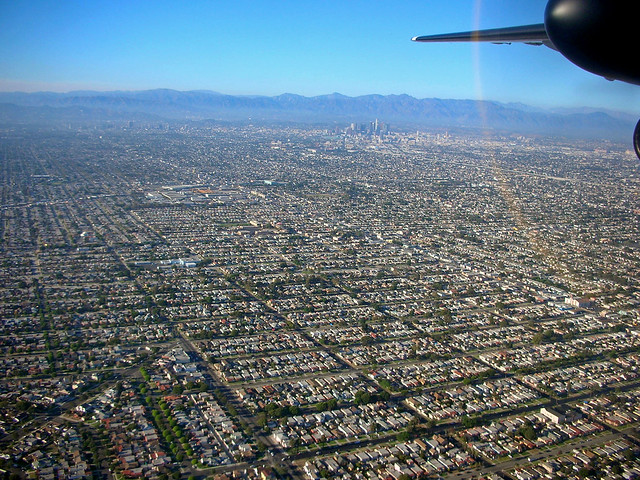
White Flight and Suburbanization
Suburban sprawl around Los Angeles
Image by flickr user ATIS547
While most metropolitan areas in the Mid-Atlantic continue to grow steadily, population growth within the metro areas themselves, in terms of cities vs suburbs, is uneven. From the 1950's up until the early 2000's population and economic growth in America has been strongest in its suburbs. There were a large number of catalysts for this growth shift out of urban areas, the most notable of which is the "white flight" phenomenon of white Americans leaving industrial cities for new housing in their suburbs. This in turn was precipitated by the “Great Migration” of economically disadvantaged African-Americans from the South (were racism was still prevalent and job opportunities scarce) to industrialized cities in the Northeast and Midwest between 1940 and 1970. As blacks moved into traditional white European-American neighborhoods, ethnic frictions served to accelerate flight into the suburbs because of lower property values and higher crime rates.