Monday, August 18, 2014

Atlantic City's Ongoing Gambling Woes Get Worse

The Collapse of the City's Casino Market Continues as the Revel Becomes the Fourth to Close this Year


Revel Casino, Atlantic City, NJ
Barely more than a month ago I published a detailed piece on the Mid-Atlantic's lucrative casino market, and how new properties in Pennsylvania and Maryland were putting some serious pressure on the long-established hub market in Atlantic City, NJ. Well, it turns out that my ominous assessment of the situation in Atlantic City was astonishingly accurate (or even understated). In the short time since I published my post, three more casinos in Atlantic City have announced that they will close permanently by the end of the year. This is in addition to the closure of the Atlantic Club earlier in the year.

The most recent closing announcement is almost certainly the most tragic, but not all that surprising. Yesterday, the owner of Revel announced that the casino would close no later than Sept. 10 of this year. The fact that the casino (which was in its 2nd bankruptcy at the time of my June post) has only been open for hardly two years and cost around $2.4 billion to construct just makes its closure all the more shocking. It's hard to imagine a more colossal waste of investment.

In addition to the Revel, Showboat Casino (opened 1987) and Trump Plaza (opened 1984) will also be closing within a month. The Atlantic Club (opened 1980) was shuttered in January. Currently, these are the only closings planned, but it wouldn't be surprising if they aren't the last. Of course, it's extremely unlikely that all of the city's casinos will close, but to cope with the increasing demand the market will need to "right size" by lowering gaming/hotel room supply to match the lower demand at a new equilibrium. There's no telling how long that will take, especially since there are still casinos in Maryland and Pennsylvania, (and now New York) that have yet to open.

Friday, July 25, 2014

The "Snobbiest" Small Cities in the Mid-Atlantic

Bethesda Row in Bethesda, MD - #2 Snobbiest Small CIty
Photo Credit: ehplen via Flickr
Last week, real estate website Movoto released its ranking of the "10 Snobbiest Small Cities in America." This ranking is in the same vein as Movoto's previous ranking of the "10 Most Exciting Suburbs." 

While I'm not sure I agree with the use of the word "snobby" to describe these admittedly affluent cities, since it could be viewed as derisive to their residents (personally I would use "preppy"), the ranking does seem to be somewhat accurate. (I tend to appreciate rankings that actually use statistical data as criteria, rather than anecdotal experiences or informal polls.) Out of the top 10, three of the cities are located in the Mid-Atlantic: Bethesda, MD (#2), Hoboken, NJ (#6), and Rockville, MD (#8). 


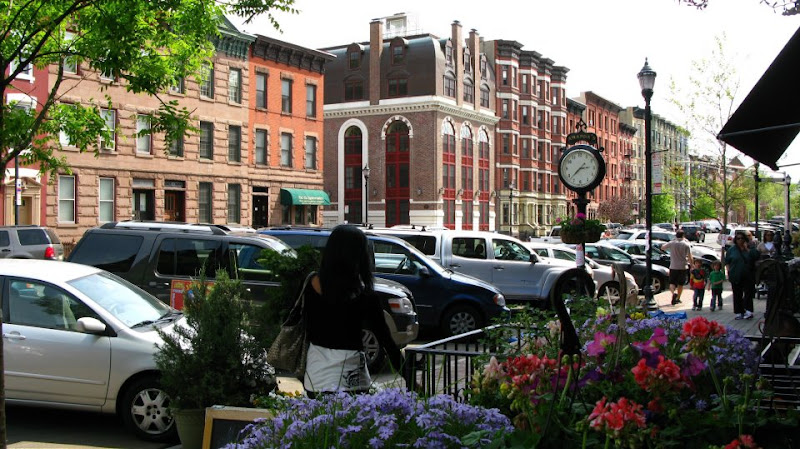
Washington St in Hoboken, NJ - #6 Snobbiest Small City 
Photo Credit: City of Hoboken
Bear in mind that to qualify as "small cities" according to Movoto (and similar to my definition) populated places (incorporated or not) had to have populations of between 45,000 and 65,000. This explains the absence of places such as Potomac (which just barely missed the 45K cutoff) and Chevy Chase, MD  and Scarsdale and Chappaqua, NY. I honestly think the ranking should have focused on smaller towns (pop. ~25,000-50,000) which have less income and cultural deviations. Some of these cities (such as Hoboken and Rockville) are rather large and multi-cultural to be considered "snobby" (preppy) as a whole.

The other issue with this ranking is that it doesn't take into account relative wealth. For instance, in Montgomery County, Rockville isn't really viewed as a "snobbish" or particularly exclusive city, especially compared to it's neighbors immediately to its south. Compared to other cities in other states it might seem very well-to-do, but in the 2nd wealthiest metro area, in the 2nd wealthiest county of the wealthiest state in the nation it is merely "upper middle-class."

Top 10 "Snobbiest" Small Cities in America
Rank City
1. Palo Alto, CA
2. Bethesda, MD
3. Brookline, MA
4. San Rafael, CA
5. Walnut Creek, CA
6. Hoboken, NJ
7. Oak Park, IL
8. Encitas, CA (tie)
8. Rockville, MD (tie)
10. Laguna Niguel, CA

Monday, June 30, 2014

The Mid-Atlantic's Casinos

The Gold Rush to Build New Casinos in the Region Continues to Gain Momentum 

Future MGM National Harbor
National Harbor, MD
Photo Credit: MGM
Until about 20 years ago, the only casino gambling options available to residents of the Mid-Atlantic were located in Atlantic City, New Jersey. Today, while other regions still only have legalized casino gambling concentrated in select few jurisdictions (particularly in the South and West), every state in the Mid-Atlantic region has legalized at least some form of (strictly) regulated commercial gambling and has at minimum solicited bids for the construction of multiple casinos.

Casinos in the Mid-Atlantic: The Numbers
Number of:DelawareMarylandNew JerseyNew YorkPennsylvaniaWest Virginia
Casinos36*11913*5
   - Commercial030040
   - Racinos310964
   - Resort0211031
Slot Machines/VLTs7,00012,89324,36815,77927,2508,020
Table Games1724021,5400785228
Hotel Rooms50050017,6385731,3781,520


*Includes one casino to be constructed in the near future


Resorts International Atlantic City: the East Coast's first casino
Atlantic City, NJ
History of Mid-Atlantic Casinos
Casino gambling first arrived in the Mid-Atlantic in 1978 in Atlantic City. ("Gambling halls" with slot machines did exist previously however in Charles County, MD from 1949 until they were outlawed in 1968). Between the end of World War II and the 1970's, the previously well-regarded resort city had entered into a steep decline, becoming plagued crime, poverty, and corruption. In an effort to revitalize the city, in 1976 New Jersey voters approved casino gambling for Atlantic City. Immediately after the legislation passed, the owners of the Chalfonte-Haddon Hall Hotel began converting it into the Resorts International. It was the first legal casino in the eastern United States when it opened on May 26, 1978 and still exists among 10 other casinos currently operating in the city.

While Atlantic City never reached the success of Las Vegas--the so-called "Entertainment Capital of the World"-- the city's casinos helped the city regain its status as a desirable resort destination, one of the most popular in the nation by the end of the 1980's. 
The success didn't last long though. WIth the advent of two Native American casinos in Connecticut and the era of "mega resorts" in Las Vegas in the 1990's, tourism in Atlantic City began a period of decline that continues to this day. The arrival of casino gambling in neighboring states has significantly compounded the problem and will likely continue to do so into the future.


Aerial view of Hollywood Casino at Charles Town Races
Charles Town, WV
Casino Gambling Expands Beyond Atlantic City
Atlantic City's first wave of regional competition appeared in 1994 when both Delaware and West Virginia legalized gambling at "racinos"--combined horse (and dog) racetracks and casinos. Two years earlier, in New England, Rhode Island had also legalized racinos. Racinos proved to be very successful, particularly in West Virginia, and helped revitalize run-down racetracks as well as provide an overall boost to the horseracing industry. Legalization of racinos soon spread across the country, as far away as New Mexico, and are now legal in a total 12 states. New York, one of the most recent states to authorize racinos, legalized them in October 2001, and there are now 9 located throughout the state, including two located in or near New York City: Empire City Casino at Yonkers Raceway and Resorts World Casino New York at Aqueduct Racetrack. The opening of the New York  casinos further added to the misfortunes of the Atlantic City casinos.


SugarHouse Casino
Philadelphia, PA
Later in the decade, the legislatures of Maryland and Pennsylvania (the last two commercial gambling holdouts in the Mid-Atlantic) both passed measures to legalize casino gambling in 2008 and 2004 respectively. Unlike the other states of the region (except New Jersey), both states went a step further than racinos by legalizing a limited number of stand-alone casinos with strict restrictions attached. In addition to seven racino licenses, Pennsylvania made five licenses available stand-alone casinos (two in Philadelphia, one in Pittsburgh, and two at-large), and additional two to existing hotel resorts. Maryland passed similar legislation (ratified by voters in a 2008 referendum) which allowed the construction of five casinos in four counties and Baltimore city geographically dispersed throughout the state. Two of these casinos were built as racinos at existing horse tracks.


Horseshoe Casino Baltimore (opening fall 2014)
Baltimore, MD
Custom Google Map with location, pictures, and critical info of every casino in the Mid-Atlantic:

(Tip: Press the box above the map in the top right corner for a better view)

Tuesday, May 27, 2014

Baltimore's Skyscrapers (Part II)

New Skyscrapers to Elevate City Skyline

414 Light St
Two weeks ago, I wrote about recent skyscraper proposals in Baltimore that didn't survive the recession. Now that Baltimore is well on its way to recovery, and development demand in the city is again on the rise, there have been quite a few new high-rise proposals put forth by developers. Not surprisingly, the vast majority of these proposals are primarily residential in nature, particularly rental apartments, but there is at least one build-to-suit office project as well as a condominium project on the near-term horizon. 

According to 2014 release of the Downtown Partnership of Baltimore\s annual development report, there are 1,137 apartment units under construction and over 2,010 units in the planning (including office-to-residential conversions). The report also estimates that over the course of the next several years, an additional 3,300 housing units, 550 hotel rooms, 300,000 sq. ft. of retail space, 560,000 sq. ft. of office space, and 760,000 sq. ft. of institutional space will be added to the Downtown Baltimore market.

Despite the promising statistics, the Baltimore real estate market is still struggling in a number of areas. Not only is the office market continuing to be pretty weak (the tallest buildings in nearly all large American city are office buildings), the retail sector has also seen surprisingly sluggish growth (which will likely improve over the long run). In addition, the 'new generation' of Baltimore high-rises are modest in scale compared to the pre-recession proposals. Only one building proposed exceeds 400 ft in height (and even that was greatly reduced from 715 ft.). Developers (and their financial investors/partnersare clearly more cautious and risk-averse now, so this sudden "fear of heights" might unfortunately be a part of a new, post-'Great Recession' reality. 

Another cause for the smaller scale of new skyscrapers, specifically in the residential sector, is the stiff competition  from the ever increasing number of office-to-residential building conversions in the downtown area (thanks to the weak office demand). Some buildings, such as the Four Seasons hotel/condo skyscraper and Exelon headquarters tower, have seen their height reduced significantly

In any case, any additional skyscrapers will be an improvement on the Baltimore skyline which is becoming increasingly aged due to the lack of development. Listed below are the current proposals:

(Note: This list contains buildings proposed to be 200 ft or taller likely to be constructed over the next few years. For existing proposals that have been delayed indefinitely see Part I)

Tuesday, May 13, 2014

Baltimore's Skyscrapers (Part I)

'Charm City's' Tallest Buildings, and Ambitious Proposals Thwarted by the Recession

Proposed 44-story Four Seasons Hotel & Residences
(currently only partially completed)
Last February, I posted an article on the tallest existing and proposed buildings in Washington D.C. and its immediate suburbs. This two-part post will take a look at the tallest buildings in Baltimore as well as the latest proposals for new skyscrapers in the city, (plus some that were proposed over the past decade but never built).

Washington is well known for it's short, uniform skyline with nearly every building being built less than 200 ft. high. Of course this allows the 555 ft. Washington Monument and the 289 ft. U.S. Capitol to easily stand out against the backdrop of mostly 10- to 15-story "highrises." Unlike Washington D.C. though, it's more blue collar neighbor to the north has a more "conventional" urban skyline. Baltimore has a number of considerable number of skyscrapers (defined as buildings over 300 ft on this site) including the tallest building in the entire Baltimore-Washington Region--the 529 ft. Transamerica Tower (formerly the Legg Mason building).

Despite having a significant amount of buildings over 300 ft., Baltimore still lacks any "supertalls" (buildings over 1,000 ft. tall) and it's tallest building is shorter than the tallest buildings of many less-populated cities. A major reason for this has been the weak residential and office market in Baltimore over the last few decades. While Washington D.C. has seen a boom in new residents and hasn't lacked for well-paying jobs thanks to the federal government, Baltimore, on the other hand, has been somewhat struggling to attract and retain businesses as well as residents (as has been the case in many blue-collar cities in the Northeast and Midwest). 

Baltimore's fortunes have begun to change though. A recent reversal of the decades-long population decline and a large influx of residents into the city's core neighborhoods surrounding the Inner Harbor, are promising signs of a brighter future, although business growth has still remained slow. Developers have taken notice of the city's recent resurgence and have proposed (and constructed) a multitude of new buildings in the city (nearly all residential), including skyscrapers. 

Unfortunately, the recent recession took it's toll on Baltimore's real estate market, and many of the more ambitious (read: very expensive to finance) projects have failed or been postponed indefinitely, including a number of buildings that would have been the city's tallest. Below is a ranking of the tallest buildings in the city currently and, following that, proposals for new skyscrapers that were derailed by the recent recession. In a second part to this post will be a list of new skyscraper proposals that are somewhat toned down in scale, but (hopefully) more likely to actually be constructed. 


Transamerica Tower- Currently the tallest building in Baltimore
Below is a ranking of the tallest buildings in Baltimore:

Name Stories Height (ft)
1. Transamerica Tower 40 529
2. 10 Light St 37 509
3. William Donald Schaefer Building 37 493
4. Commerce Place 31 454
5. 100 E Pratt St 28 418
6. Baltimore World Trade Center 32 405
7. Tremont Plaza Hotel 37 395
8. Charles Tower South Apartments 30 385
9. = Blaustein Building 30 360
9. = 250 W Pratt St 24 360


Continue reading to see Baltimore skyscraper proposals that failed during the recent recession:

Wednesday, February 12, 2014

Amtrak's New Northeast Corridor Workhorse

Siemens ACS-64 #600 at Sacramento Manufacturing Facility May 2013
Photo Credit: Siemens/Amtrak (for all images unless otherwise specified)
Last week Friday (Feb. 7) Amtrak's newest fleet member completed its inaugural run on the the busy Northeast Corridor line on Northeast Regional #171 from Boston South Station to Union StationWashington D.C. The brand new Siemens ACS-64 (ACS stands for "American Cities Sprinter") electric locomotive at the head end of the train is the first of 70 of the type to be delivered to Amtrak over a period of roughly two years. The locomotives, which are assembled by Siemens in Sacramento, CA to satisfy the "Buy America" requirement for federal funding, will be delivered at a rate of approximately three per month, with the final units arriving sometime next year. 


ACS-64 engineer's compartment
In addition to eventually powering all Northeast Regional and long-distance trains on the Northeast Corridor (NEC) (which serves Washington D.C., Baltimore, Philadelphia, New York, Boston, and points in between), the new locomotives will also operate on the Keystone Corridor branch line between Philadelphia and Harrisburg, PA. 

The incoming locomotive units will replace the 20 EMD AEM-7 (DC), 29 EMD AEM-7 (AC), and 15 Bombardier/Alstom HHP-8 electric locomotives currently powering trains on the NEC, most having over 3.5 million miles on them. The Swedish-designed AEM-7 locomotives (nicknamed "toasters" and originally all DC units) were delivered to Amtrak between 1978 and 1988. Between 1999 and 2002, 29 of these locomotives were upgraded by Amtrak and Alstom  to "AC" units with greater amount of horsepower allowing them to haul longer trains. 

Wednesday, February 5, 2014

The Mid-Atlantic's Most "Exciting" Suburbs

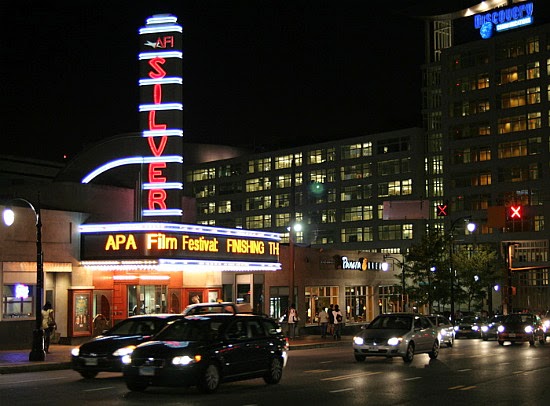
Downtown Silver Spring, MD at night
Photo Credit: UrbanTurf DC
Yesterday, real estate website Movoto released its ranking of the "Most Exciting Suburbs In America." Movoto created its ranking by selecting the 139 largest suburbs (using Census data)
and averaging their ranking over the following 6 criteria:
  • Nightlife per capita (bars, clubs, comedy, etc.)
  • Live music venues per capita
  • Active life options per capita (parks, outdoor activities, etc.)
  • Fast Food restaurants per capita (the fewer the better)
  • Percentage of restaurants that are fast food (the lower the better)
A number of suburbs in the Mid-Atlantic made the top 50 ranking, although none of them made the top 10. The region also seems to be a little underrepresented on the top 50 as well with only with only five suburbs ranked (16% of US population should equal exactly 8 on the list)

The #1 ranked suburb in the nation, Cambridge, MA, isn't really a surprise, neither are a few of the others in the top 10 such as Berkeley, CA and Santa Monica, CA. Some of the other top 10 suburbs however, might cause a few raised eyebrows.  It should come as no surprise though that many suburbs on the list are college towns including the Mid-Atlantic's "most exciting": Towson, MD.

Continue reading to see the national top 10 "most exciting" suburbs ranking as well as the most exciting suburbs here in the Mid-Atlantic.